Heart Beat Font: A Sweet & Friendly Handwritten Typeface
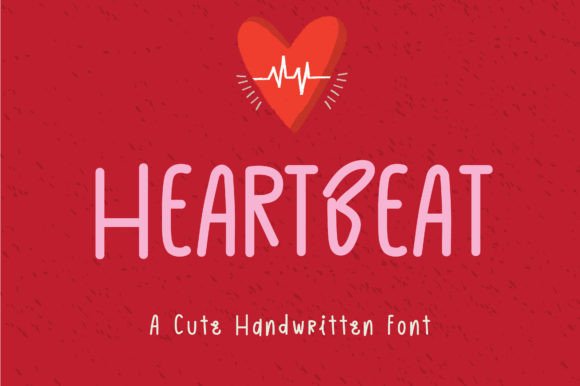
There's a reason handwritten fonts never go out of style. They carry a warmth and authenticity that polished, geometric typefaces often struggle to convey. When you see a design that feels personal, approachable, and genuinely human, there's a good chance a carefully chosen script or handwritten font is doing the heavy lifting. Heart Beat Font is one of those typefaces that immediately communicates sweetness and friendliness, making it a versatile addition to any designer's toolkit.
Understanding the Personality Behind the Letterforms
At its core, Heart Beat Font is a handwritten font with a natural, flowing character. The letterforms aren't rigidly uniform—they have that organic irregularity you'd expect from actual pen on paper, which gives them genuine charm. Each character carries a slightly bouncy baseline and rounded edges, creating a visual rhythm that feels inviting rather than chaotic.
What makes this particular typeface stand out in a crowded market of creative fonts is its balance. Some handwritten fonts lean too far into casual territory, becoming difficult to read at smaller sizes. Others try to mimic handwriting so precisely that they lose versatility. Heart Beat Font sits comfortably in the middle ground—expressive enough to add personality, yet structured enough to remain functional across different applications.
The overall aesthetic feels contemporary without being trendy in a way that will date quickly. It's the kind of premium font that works equally well in a children's book layout and on a boutique bakery's menu. That adaptability is precisely what makes it valuable for designers and small business owners who need typefaces that can serve multiple purposes without feeling repetitive.
Where Heart Beat Font Truly Shines
Let's talk about real-world applications, because a font is only as good as the projects it elevates. Heart Beat Font performs exceptionally well in several specific contexts, and understanding these will help you decide whether it fits your next project.
Branding and Logo Design
For businesses that want to project warmth and approachability, this typeface offers genuine personality without sacrificing professionalism. Think about local coffee shops, handmade jewelry brands, wellness studios, or children's clothing lines. These businesses need their logo design to feel welcoming and authentic. Heart Beat Font delivers that emotional connection immediately, which is exactly what strong brand identity work requires.
Publishing and Editorial Design
In editorial design, handwritten fonts typically serve as accent typefaces rather than body text. Heart Beat works beautifully for chapter titles, pull quotes, feature headers, and magazine coverlines. It pairs well with clean serif fonts for body copy or modern sans serif fonts for a more contemporary feel. The key is using it strategically—letting it add personality where you need emphasis without overwhelming the reading experience.
Packaging and Product Design
Packaging design is where Heart Beat Font arguably reaches its full potential. Product labels, gift tags, box designs, and retail packaging all benefit from that handmade quality. It suggests craftsmanship and care, which influences how consumers perceive product value. Whether you're designing artisanal food packaging or beauty product labels, this font communicates that something special went into the making.
Digital and Social Media
Online, attention spans are short and visual competition is fierce. Social media graphics need typefaces that grab attention quickly while remaining readable on small screens. Heart Beat Font works well for Instagram posts, Pinterest pins, Facebook headers, and YouTube thumbnails. Its friendly character also makes it suitable for web design elements like call-to-action buttons, hero section accents, and email newsletter headers—places where you want personality without compromising user experience.
Making Smart Font Pairing Decisions
No font exists in isolation. One of the most practical skills in modern typography is knowing how to combine typefaces effectively. Heart Beat Font, being a handwritten font with strong personality, benefits enormously from thoughtful pairing.
The safest approach is combining it with a neutral, well-spaced typeface. A geometric sans serif font like Montserrat or Lato provides clean contrast without competing for attention. If your project calls for something more traditional, a transitional serif font like Georgia or Source Serif Pro creates an elegant tension between formal and casual that works beautifully in editorial contexts.
Avoid pairing Heart Beat with other decorative or script fonts—the visual noise becomes overwhelming, and neither typeface gets the breathing room it needs. The general principle applies here: contrast in style, harmony in mood. Both fonts should feel like they belong in the same conversation, even if they speak very differently.
Practical Considerations Before You Commit
Before integrating any commercial font into your workflow, a few practical checks will save you headaches later.
- Test readability at your intended size. Set a sample paragraph at the exact dimensions you'll use. What looks charming at 72px might become illegible at 14px. Heart Beat Font handles mid-range sizes well, but always verify for your specific application.
- Review the full character set. Check for ligatures, alternates, numerals, and punctuation. A quality typeface includes thoughtful details in these often-overlooked areas.
- Understand the licensing terms. Whether you're using it for a client project, a product you're selling, or a personal blog, make sure the license covers your intended use. Most premium font licenses distinguish between personal and commercial applications.
- Evaluate kerning and spacing. Even beautifully drawn letterforms can look amateurish with poor spacing. Set words you'll actually use and check that the rhythm feels consistent.
- Consider your audience's expectations. A handwritten font might delight a craft workshop's customers but could undermine credibility for a financial services firm. Context always matters.
Building a Consistent Visual Language
Typography is one of the most powerful tools for creating brand identity consistency. When you select a font like Heart Beat and use it consistently across touchpoints—your website, packaging, social media, printed materials—you build recognition. Customers begin associating that visual style with your brand before they even read the words.
This is where the concept of a type system becomes practical rather than theoretical. Define where Heart Beat Font appears in your hierarchy. Maybe it's exclusively for headlines and accent text. Perhaps it's reserved for specific product lines or seasonal campaigns. Whatever you decide, document it and stick to it. Consistency transforms a nice font choice into a strategic design asset.
The natural and unique style of Heart Beat Font makes it incredibly fitting to a large pool of designs. From wedding invitations to startup pitch decks, from blog headers to retail signage, its sweet and friendly character adapts to context while maintaining its distinctive voice. The only real limit is your imagination—and your willingness to experiment, test, and refine until the typography serves both the design and the audience perfectly.