Moria Story Font: A Swift, Authentic Handwriting Style
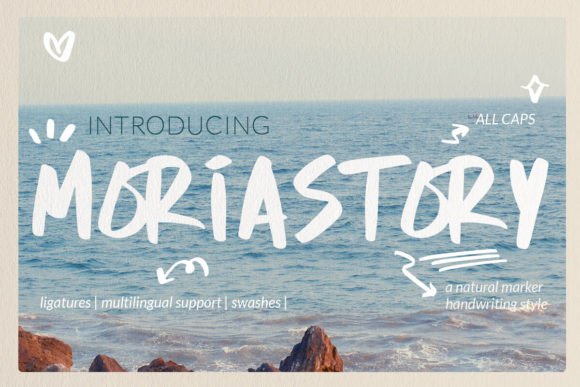
There’s a certain energy in handwriting that’s done quickly, without overthinking. It’s personal, immediate, and full of character. Capturing that spontaneous feel in a digital font is a challenge, but the Moria Story Font does it with remarkable authenticity. This isn't just another script font; it's a premium font designed to mimic the look of someone writing swiftly and naturally. Its charm lies in its imperfections and its unique features, like two distinct uppercase letter variations and special ligatures, which prevent the repetitive, mechanical look that plagues many handwritten typefaces.
For designers, entrepreneurs, and creators, finding a font that feels genuine can transform a project. Moriastory offers that genuine handwritten feel, making it a powerful tool for adding personality without sacrificing professionalism. It strikes a balance between being a creative font with flair and a practical commercial font for various applications. Let’s explore where this typeface shines and how to use it effectively.
The Visual Personality: More Than Just a Script
At first glance, Moria Story Font presents as a fluid, connected handwritten font. But look closer, and you’ll notice the details that set it apart. The swift stroke modulation gives it life, suggesting the motion of a pen on paper. The inclusion of two distinct uppercase letter variations is a standout feature. This allows you to vary the look of initials or headings, avoiding the uniformity that makes some fonts feel static. Whether you’re crafting a logo design or a headline for editorial design, this variation adds a layer of organic realism.
The unique ligatures are another key strength. These aren't just decorative; they're functional. They connect letters in ways that mimic how a hand would naturally move, creating smoother, more legible words. This makes Moriastory far more readable than many overly stylistic script fonts, especially in short to medium-length text blocks. Its overall appeal is one of approachable sophistication—friendly enough for a personal blog, yet polished enough for brand identity materials.
Where This Handwritten Font Truly Excels
Understanding a font's personality is one thing; knowing where to apply it is another. The Moria Story Font is versatile, but it has sweet spots where its qualities are amplified.
Branding and Identity Projects
For businesses aiming to project warmth, authenticity, and a human touch, this font is a strong candidate. It works beautifully for:
- Logo design for boutiques, cafes, craft studios, or creative agencies.
- Brand collateral like business cards, thank-you notes, and packaging.
- Creating a consistent brand identity that feels personal and trustworthy.
Pairing it with a clean sans serif font or a classic serif font for body text creates excellent visual hierarchy, letting the display font qualities of Moriastory anchor the design.
Marketing and Social Media
In the fast-paced world of social media graphics, standing out is crucial. Moriastory adds instant personality to:
- Instagram quotes and story templates.
- Email newsletter headers and call-to-action buttons.
- Digital ads and promotional banners where a personal touch increases engagement.
Its handwritten style can make marketing messages feel less corporate and more conversational, which is a powerful tool for audience connection.
Publishing and Editorial Use
While not suited for long-form body copy, it excels in editorial design for:
- Magazine pull quotes and feature article titles.
- Book cover designs, especially in genres like romance, memoir, or contemporary fiction.
- Blog post headers and section dividers in digital or print layouts.
Using it here injects a dose of humanity and style, breaking up the monotony of standard text blocks.
Digital and Print Applications
As a premium font, Moriastory is built for both screen and print. Its clarity holds up well in web design for headers and navigational elements, as long as size is considered. In print, it’s ideal for packaging design, wedding invitations, greeting cards, and any project where a tactile, handmade feel is desired. Crafters and hobbyists will find it invaluable for custom projects, from vinyl decals to personalized stationery.
Practical Guidance for Using Moriastory
Adopting any new design asset requires some strategy. Here’s how to integrate the Moria Story Font effectively.
Evaluating Project Fit
Ask yourself: does my project need to convey authenticity, warmth, or creativity? If the goal is to appear highly technical, corporate, or minimalist, a handwritten font might clash. But for projects where human connection is key—like a small business owner’s brand, a lifestyle blog, or artisan product packaging—it’s often a perfect match.
Testing Font Pairings
The strength of a display font like this is often revealed in its pairing. A robust sans serif font like Montserrat or Open Sans provides a clean, modern counterpoint. A traditional serif font like Lora or Playfair Display can create a more elegant, editorial feel. Always test pairings in context. Set a headline in Moriastory with your chosen body font and evaluate the visual hierarchy and overall rhythm.
Considering Readability and Hierarchy
While more legible than many script fonts, it’s still a creative font best used for emphasis. Use it for headlines, subheadings, logos, and short call-outs. For body text, always pair it with a highly readable sans serif or serif font. This ensures your message is clear while the handwritten elements add stylistic flair.
Reviewing Included Styles and Licensing
Before purchasing, check what’s included. Does the font family offer multiple weights or just the one style? For a commercial font, verify the license covers your intended use—whether for a client project, merchandise, or digital products. Understanding these details prevents legal headaches and ensures you have the right tools for the job.
In the end, the Moria Story Font is more than just a collection of glyphs. It’s a tool for storytelling. Its swift, authentic strokes can bring a project to life, making it feel personal, engaging, and distinctly human. Used thoughtfully, it becomes a cornerstone of effective modern typography, bridging the gap between digital precision and the irreplaceable warmth of the human hand.