Cute Column Font: Blending Whimsy with Clean Design
There’s a particular challenge in digital design that many of us face: how do you make text feel personal and warm without sacrificing clarity? Whether you’re building a brand identity for a small business, designing social media graphics, or organizing digital notes, the typeface you choose sets the entire tone. Too formal, and you lose approachability. Too casual, and you risk looking unprofessional. This is where a creative font like Cute Column finds its niche—it’s a typeface built on the idea that charm and functionality aren’t mutually exclusive.
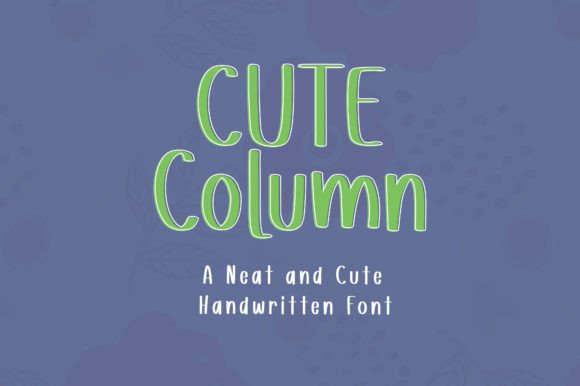
At its core, Cute Column is a premium font that draws inspiration from both clean sans serif structures and the fluid, imperfect beauty of handwritten script. Imagine the neatness of a well-organized column in a spreadsheet or notebook, but with the subtle, organic irregularities of a person’s actual handwriting. The letters have a consistent baseline and x-height, which keeps them highly legible, but they carry a gentle bounce and slightly varied stroke widths. This isn’t a full-blown, looping script font that’s hard to read in paragraphs. Instead, it’s a modern typography hybrid—a display font with a friendly personality that works surprisingly well in short-form text.
The Visual Personality: More Than Just "Cute"
The name might suggest something overly simplistic, but the reality is more nuanced. Cute Column’s design avoids the overly rounded, bubbly look that can sometimes feel juvenile. Instead, it offers a refreshing handwritten style that feels mature and intentional. The characters are open and airy, with generous spacing that prevents the text from feeling cramped. This makes it an excellent choice for editorial design where you need to inject personality into headers or pull quotes without overwhelming the reader.
Think about the last time you read a blog post or a product description that felt sterile. Now, imagine that same content presented in a typeface that feels like it was written by a friendly, organized colleague. That’s the subtle power of a font like this. It builds an immediate, subconscious connection with the audience. For entrepreneurs and content creators, this is invaluable. Your brand voice isn’t just what you say; it’s how you present it visually. Using Cute Column in your logo design or on your website headers can signal that your brand is approachable, creative, and detail-oriented.
Where This Font Truly Shines: Practical Applications
While it’s tempting to use a beautiful typeface everywhere, strategic application is key. Cute Column excels in environments where clarity and character need to coexist. Here’s where I’ve seen it work best in real-world projects:
- Digital Planning & Note-Taking: This is its native habitat. If you create digital planners, study notes, or collage notes for platforms like GoodNotes or Notability, this font is a game-changer. It transforms a simple checklist or schedule into something visually engaging and memorable. The clean lines ensure your to-do list remains readable, while the handwritten touch makes the process of planning feel less like a chore and more like a creative activity.
- Branding for Small Businesses & Etsy Sellers: For businesses selling handmade goods, stationery, or boutique products, Cute Column can form the backbone of a brand identity. It’s perfect for packaging design—think labels, thank-you cards, and care instructions. It communicates a hands-on, artisanal quality that aligns perfectly with products that have a personal touch.
- Social Media Graphics & Marketing: In the fast-scrolling world of Instagram or Pinterest, you have seconds to capture attention. A creative font like Cute Column can make your quotes, announcements, or sale graphics stand out. It’s particularly effective for lifestyle bloggers, coaches, and educators who want to convey warmth and authority simultaneously. Pair it with a simple sans serif font for body text to create a clean, professional hierarchy.
- Publishing & Editorial Design: While not suited for long-form book text, it’s a fantastic choice for chapter titles, magazine headlines, or the cover of a workbook. Its whimsical take on traditional fonts adds a fresh, modern feel that can appeal to younger demographics or audiences looking for something less conventional than a standard serif font.
Making It Work: Font Pairing and Readability
A font doesn’t exist in a vacuum. Its effectiveness is heavily influenced by what it’s paired with. Because Cute Column has a distinct personality, it needs a complementary partner that grounds it. My strong recommendation is to pair it with a neutral, highly readable sans serif font for longer body copy. Think of fonts like Open Sans, Lato, or Montserrat. This creates a balanced visual hierarchy: the Cute Column font draws the eye to key information (headlines, subheads, labels), while the sans serif font handles the heavy lifting of paragraphs and detailed text. This pairing strategy ensures your design remains professional and easy to consume.
When evaluating if it’s the right fit for your project, always test it in context. Don’t just look at the alphabet on a font specimen page. Type out your actual headlines, your business name, a key product description. See how the letterforms interact. Check the spacing (tracking) at different sizes. For digital use, ensure the font renders crisply on both screens and in print previews. Most premium font licenses, including those for commercial fonts like this, will include multiple file formats (OTF, TTF, WOFF) to ensure compatibility across design software, web platforms, and operating systems.
Finally, consider the emotional resonance. Does this typeface reflect the core values of your project? If your goal is to create a brand that feels innovative, friendly, and meticulously crafted, then the unique blend of structure and spontaneity in Cute Column could be exactly the design asset you need to make your work feel both polished and genuinely human.