Stigma Font: Where Modern Edge Meets Readability
In the vast landscape of digital design, finding a typeface that balances personality with practicality can feel like searching for a needle in a haystack. We often encounter fonts that look stunning in a headline but fall apart in a paragraph, or fonts that are perfectly legible but lack any distinct character. This is the challenge that Stigma Font is masterfully designed to solve. It’s not just another typeface; it's a carefully crafted tool built to become a true favorite for creatives who demand both style and substance. If you've ever felt stuck choosing between a font that speaks and one that simply serves, Stigma offers a compelling path forward.
The Anatomy of a Modern Favorite
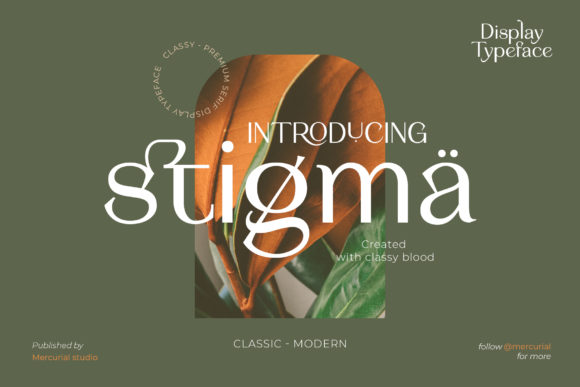
At its core, Stigma is a display font, but that simple label doesn't do it justice. Its design philosophy leans into contemporary trends while maintaining a foundation of clarity. You'll notice its cool and trendy aesthetic in its subtle geometric influences and clean, confident lines. The letterforms often feature a slight, sophisticated contrast in stroke weight, giving it a dynamic quality that avoids feeling sterile or overly mechanical. This isn't a script font or a handwritten font; its appeal lies in its structured yet approachable presence.
The true magic of Stigma lies in its readability. Many trendy display fonts sacrifice legibility for flair, but Stigma maintains open counters and thoughtful spacing. This means it holds up surprisingly well not just at large sizes for logos and headers, but also in shorter blocks of text, like pull quotes, subheadings, or product descriptions. Its personality is versatile—it can feel energetic and modern for a tech startup, or clean and authoritative for a financial blog. It’s a premium font that understands the job isn’t just to look good, but to communicate effectively.
Where Stigma Truly Shines: Practical Applications
Understanding a font's characteristics is one thing; knowing where to deploy it is where strategy comes into play. Stigma's balanced design makes it a powerhouse across a wide range of projects.
For brand identity and logo design, Stigma offers immediate recognition. A logo set in Stigma can convey a brand that is current, confident, and clear. Think of a boutique fitness studio, a modern consultancy, or a direct-to-consumer e-commerce brand. The font's distinctiveness helps with brand recall, while its professionalism builds instant trust. It avoids the fleeting nature of hyper-trendy fonts, aiming for a style that can age gracefully.
In the realm of editorial design and publishing, Stigma excels at creating visual hierarchy. Use its bolder weights for captivating chapter titles or article headlines. Its lighter weights can serve as elegant subheadings that guide the reader's eye without competing with the main body text, which would typically be set in a complementary serif font or sans serif font. For bloggers and content creators, this means your headlines on platforms like Medium or your own site can have that polished, magazine-quality feel that encourages readers to dive in.
The digital space is another natural home for Stigma. In web design, it can be used for hero sections, key navigation elements, and call-to-action buttons where you need text to pop with clarity and style. Its performance in social media graphics is particularly noteworthy. On a crowded Instagram feed or a Pinterest board, a quote or statistic set in Stigma can stop the scroll. Its clean geometry ensures it remains legible even when scaled down for a profile picture or a thumbnail.
Integrating Stigma into Your Workflow
Bringing a new design asset like Stigma into your toolkit requires a thoughtful approach. Start by evaluating its fit for your specific project. Is the goal to appear cutting-edge, or timelessly modern? Stigma leans towards the former but with enough restraint to avoid feeling dated next year. Pull up the font's specimen sheet and look at its full character set. Does it include the ligatures, numerals, and punctuation you need? A truly versatile creative font will have these details covered.
Next, master the art of font pairing. Stigma, as a display font, rarely works well alone for large bodies of text. Its strength is in headlines and callouts. Pair it with a highly readable, neutral body font. A classic sans serif font like Inter or Source Sans Pro creates a clean, modern system. For a more traditional or editorial feel, pairing it with a sturdy serif font like Lora or Merriweather can create a beautiful contrast that enhances readability and visual interest. The key is to let Stigma handle the impact and let its partner handle the storytelling.
Finally, consider the practicalities of licensing. As a commercial font, ensure the license you purchase covers your intended use—whether it's for a client's logo, a line of merchandise, or a series of e-books. Reputable foundries are clear about this. Test the font in context before finalizing. Mock up a business card, a website header, or a social media post. See how it feels at different sizes and against different backgrounds. Does it maintain its character? Does it support the message? When the answer is yes, you've likely found more than just a font—you've found a reliable partner for your creative projects, one that truly has the potential to elevate your ideas to their highest visual level.