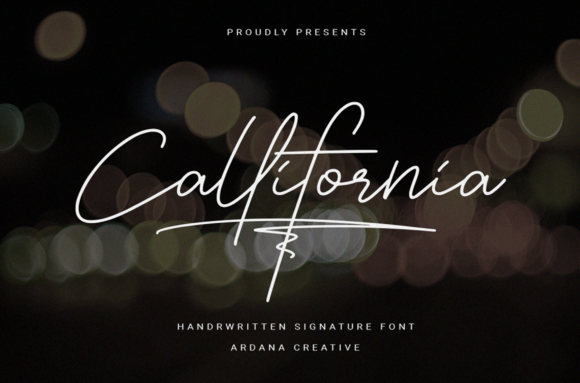
Callifornia: A Fresh Take on Classy Handwritten Fonts
There’s a particular challenge in finding a script typeface that feels both timeless and current. Too often, handwritten fonts lean heavily into a vintage or overly casual aesthetic, which can limit their use in modern projects. Callifornia strikes a different balance. It’s a premium font that carries the elegance of traditional calligraphy but wears it with a contemporary, lightweight feel. This isn’t a font trying to be rustic or folksy; it’s designed for sophistication with a fresh perspective.
The Visual Personality: Where Class Meets Contemporary
At its core, Callifornia is a script font defined by its delicate, flowing letterforms. The strokes have a consistent, gentle weight that avoids the dramatic thick-thin contrast of some classic scripts. This gives it a cleaner, more approachable appearance. The connections between letters are smooth and intentional, creating a rhythm that feels natural rather than forced. It’s the kind of handwritten font that looks like it was penned by a skilled hand, but one that’s also aware of modern design trends.
What truly sets it apart is its versatility as a display font. While it excels in larger sizes where its details can shine, it maintains a surprising level of clarity. The x-height—the height of lowercase letters like 'a' or 'o'—is generous, which aids in legibility at various scales. This makes Callifornia more than just a decorative face; it’s a workhorse for projects where you need a touch of personality without sacrificing readability.
Practical Applications: From Brand Identity to Social Media
The real test of any creative font is how it performs in the wild. Callifornia’s blend of style and substance makes it a strong candidate for a wide array of projects. Let’s break down where it fits best.
Branding and Logo Design
For logo design, a typeface needs to encapsulate a brand’s entire ethos in a few words. Callifornia is an excellent choice for businesses that want to project elegance, creativity, and a personal touch. Think boutique hotels, artisanal food brands, wedding planners, high-end cosmetics, or lifestyle bloggers. Its style suggests craftsmanship and attention to detail. When used in a logo, it can instantly communicate a brand that values quality and aesthetic refinement. Pair it with a clean sans serif font for body text, and you have a brand identity system that feels both sophisticated and accessible.
Editorial and Packaging Design
In editorial design, such as magazine headlines or book chapter titles, Callifornia can draw the reader in immediately. It adds a human, artistic element to layouts that might otherwise feel sterile. For packaging design, it’s a game-changer. Imagine it on a coffee bag label, a bottle of artisanal olive oil, or a box of handmade chocolates. The font elevates the product, suggesting something special and crafted with care. It turns standard packaging into a piece of marketing that communicates value at first glance.
Digital Presence and Marketing
The digital landscape is crowded, and standing out requires a distinct voice. Callifornia can be that voice in your web design and social media graphics. Use it for hero sections on websites, pull quotes, or promotional banners. On platforms like Instagram or Pinterest, where visual appeal is paramount, a well-chosen font pairing using Callifornia can make your content instantly recognizable. It’s particularly effective for call-to-action buttons or short, impactful headlines that need to stop the scroll.
Making the Most of Your Design Assets
Having a great font is one thing; knowing how to use it effectively is another. Callifornia’s design includes practical features that give you more control. It’s PUA encoded, which means accessing alternate characters, swashes, and ligatures is straightforward, even in basic design software. These extras allow you to customize letter combinations, add flourishes, and create truly unique typographic compositions. This level of detail is what separates a good design from a great one.
When evaluating any commercial font, especially a premium font like this, always consider the full package. Review the included styles—does it offer multiple weights or versions? Check the character set for language support. Most importantly, understand the licensing. A font’s license dictates how you can use it, whether for personal projects, client work, or commercial products like merchandise. Always ensure the license matches your intended use to avoid legal issues down the line.
Testing for Your Project
Before committing, test Callifornia in the context of your specific project. Does it maintain its charm when scaled down for a website footer? Does it pair well with your chosen serif font or sans serif font for body copy? A good practice is to create a mock-up. Place the font in your logo, on a sample social media post, and in a paragraph of text. See how it interacts with your color palette and imagery. A font that looks beautiful in isolation might clash with other elements in a complex layout. This hands-on testing is crucial for ensuring a cohesive final product.
Readability is Key
While Callifornia is designed with clarity in mind, context matters. Avoid using it for long blocks of small body text, where a simpler serif font or sans serif font would be more comfortable to read. Its strength lies in headlines, logos, and short, impactful phrases. For longer text, use it sparingly as an accent. This thoughtful application respects both the font’s design and your audience’s reading experience, ensuring your message is not only seen but also understood.
In the end, choosing a typeface like Callifornia is about aligning your visual communication with your strategic goals. It’s a tool that can help shape perception, create emotional resonance, and build a memorable presence. For designers, marketers, and creators looking to inject a dose of elegant, contemporary style into their work, it’s a design asset worth serious consideration.